
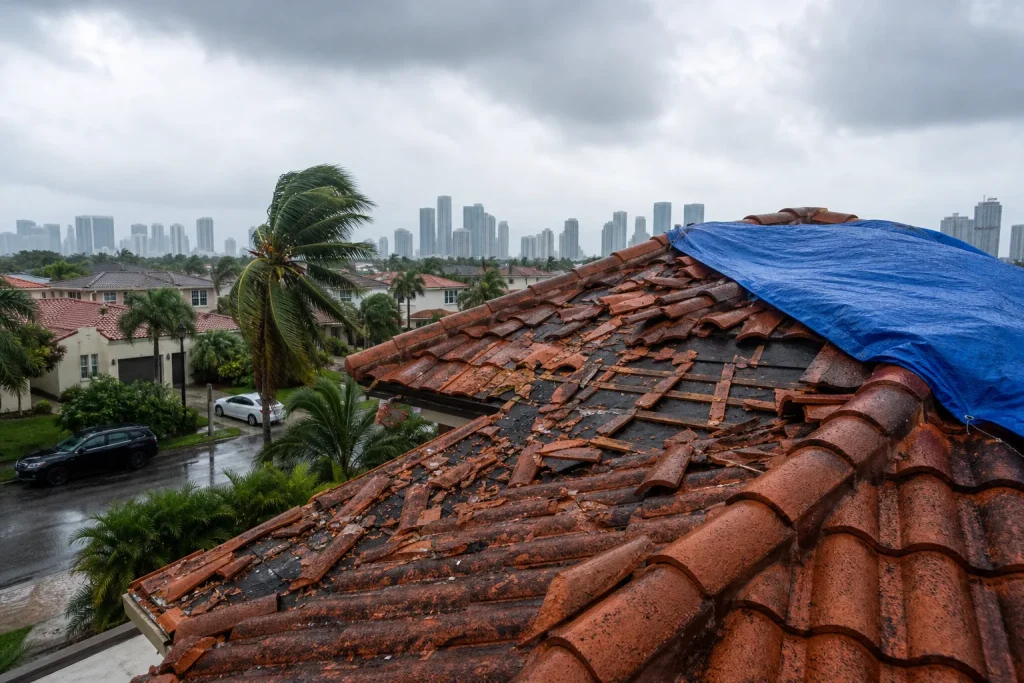
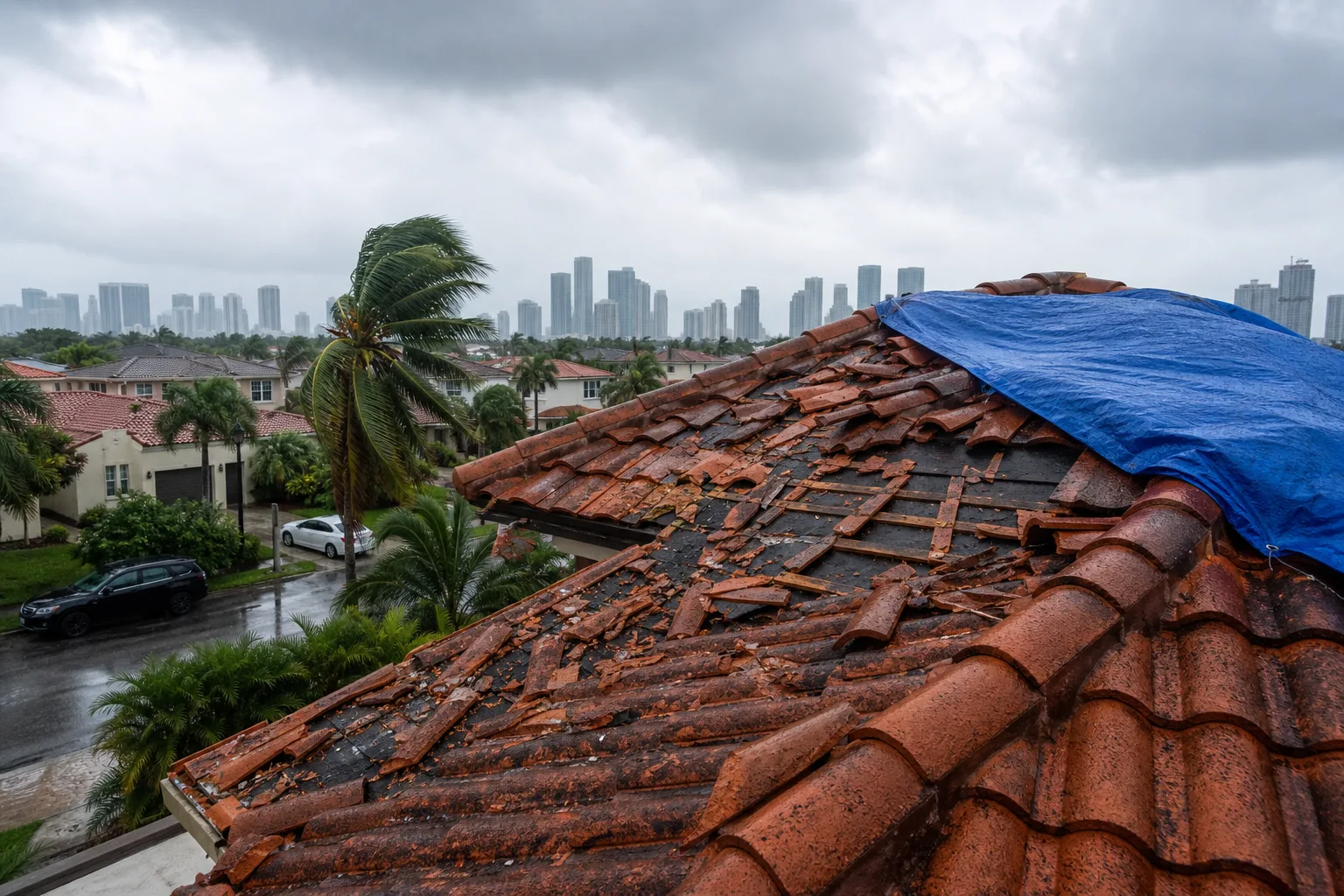
Emergency Roof Repair Near Me: What Miami Homeowners Should Do First
When a roof emergency hits your Miami home, the first 90 minutes determine whether you’re looking at a straightforward repair or months of mold remediation and insurance disputes. Start by photographing all damage with timestamps, move valuables away from the breach, and call a local roofer who answers live - not a storm-chasing outfit from three states away. If you’d rather not navigate this alone, Ridgeline Roofing Co. of Miami answers live 24/7 at (855) 837-1678.
Florida law gives your insurance company 14 days just to acknowledge a roof damage claim. But mold colonizes wet insulation in 48 to 72 hours in Miami’s humidity. By the time your adjuster schedules a visit, the secondary damage is often worse than the original breach. We’ve seen it repeatedly in neighborhoods from Coral Gables to Miami Shores - homeowners who waited on hold with out-of-town call centers while their attic turned into a petri dish.
Why the First 90 Minutes Matter in Miami
Miami’s climate doesn’t negotiate. A torn shingle at 2 p.m. becomes a ceiling stain by dinner and black mold by the weekend. The sequence of your first actions matters because insurers track it, and because water travels farther in humid air than most homeowners realize.
Here’s what to do in order:
- Photograph everything before touching it. Wide shots of the roof from the ground, close-ups of the breach, interior water marks, and any damaged belongings. Timestamp each image. Your adjuster will ask for this sequence, and gaps in documentation give insurers room to deny secondary damage claims.
- Move furniture and electronics away from the drip line. Don’t wait to see where water lands - it spreads along joists and can emerge ten feet from the entry point.
- Contain active drips with buckets and plastic sheeting. Puncture a sagging ceiling bubble to release water if it’s expanding - a collapsed section causes more damage than a controlled drain.
- Deploy a tarp only if wind conditions allow safe access. In residual storm winds, a poorly secured tarp becomes a sail that tears off more shingles. If you’re not certain, wait for a professional.
- Call a local roofer with live phone answering. Document the time of your call. Insurers note response delays when evaluating claim validity.
We responded to a call in Little Havana last September where the homeowner had done steps one through four perfectly. Her insurer covered everything, including the drywall replacement, because her timestamped photos proved the damage hadn’t sat unaddressed. The neighbor three doors down, who waited two days for a callback from a Google ad contractor, fought his carrier for eleven weeks.
How to Vet an Emergency Roofer in Under Five Minutes
Calling a “24/7 emergency roofer” from a Google ad during or immediately after a storm is the single highest-risk decision a Miami homeowner makes. Storm-chasing contractors monitor weather radar and dispatch crews before rain stops. They’re trained to close fast, and they know you’re not thinking clearly.
Five questions that separate local operators from fly-by-night crews:
- “What’s your physical address in Miami-Dade?” Vague answers or P.O. boxes mean they’re not local. Ask for the cross streets.
- “Can you send me a photo of your company vehicle with local plates?” Storm chasers rent trucks and magnetic signs. Real local roofers have branded fleets you recognize.
- “Will you put your estimate in writing before any work begins?” Verbal quotes vanish when problems arise. Our Ridgeline Roofing Co. of Miami home page explains how we handle this.
- “Do you carry general liability and workers’ comp certificates I can verify?” Uninsured crews on your roof create liability you carry.
- “What’s your company’s name in Florida’s Division of Corporations database?” Legitimate contractors register properly. Chasers often operate under multiple DBA names.
If a contractor pressures you to sign anything before you’ve verified these basics, end the call. The damage in your attic won’t worsen meaningfully in the hour it takes to find a legitimate operator.
The AOB Trap: What You’re Signing at Your Front Door
Florida’s Assignment of Benefits (AOB) law changed in 2019, but storm-chasing contractors still use contract language designed to capture your claim rights. When you sign an AOB, you’re handing your insurance policy’s benefits directly to the contractor - they bill your insurer, negotiate the claim, and sometimes sue your carrier in your name.
Specific red flags in post-storm contracts:
- Language stating the contractor “is hereby assigned all rights and benefits under the policyholder’s insurance policy”
- Clauses allowing the contractor to “pursue all available remedies, including litigation, to recover payment”
- Percentage-based fees tied to the total claim amount rather than actual repair costs
- Waivers of your right to cancel within the legally required period
Legitimate Roof Repair in Miami doesn’t require signing away your policy. At Ridgeline, we document damage, provide written estimates, and work directly with your adjuster - but the claim stays in your name, where it belongs. We’ve been in Miami since 1984, and we plan to file next year’s taxes here too. There’s no incentive to burn a relationship for one inflated claim.
Emergency Tarping vs. Emergency Repair: Know the Difference
Conflating these two services creates claim complications that surface months later when your insurer denies permanent work coverage.
Emergency tarping is temporary weatherproofing. It’s documented, insurer-reimbursable, and requires no permit. A proper tarp installation in Miami uses 2×4 battens anchored to the roof deck, not shingles, with edges sealed to prevent wind uplift. It buys time for proper inspection and adjuster review.
Emergency repair is permanent work - replacing damaged shingles, sealing penetrations, or patching decking. In Miami-Dade, this triggers permit requirements and inspection obligations. If a contractor performs permanent repairs before your adjuster documents the original damage, your insurer may classify it as unverified and refuse payment.
We handle both services, but we distinguish them clearly in writing. Our technicians photograph the pre-tarp condition, the tarp installation, and the eventual permanent repair - three separate documentation sets that protect your claim. For permanent solutions, see our Roof Replacement & Installation in Miami page.
What “24/7 Live Phone” Actually Means During Miami’s Contractor Bottleneck
After Hurricane Ian’s outer bands hit Miami in 2022, our phones rang 340 times in 72 hours. Many callers had already tried three or four numbers that went to voicemail or answering services with “we’ll call you back” promises that never materialized.
Our live-phone commitment isn’t an answering service. It’s a specific protocol: a Ridgeline employee with dispatch authority answers, assesses whether you’re facing active water intrusion or post-storm documentation needs, and schedules accordingly. For active leaks, we aim to have a technician on-site within four hours. For documentation-only calls, we schedule next-day inspection with photo reporting.
This matters because Miami’s post-storm contractor bottleneck is predictable. Every major weather event, the same pattern: day one, everyone calls; day three, the out-of-town crews arrive with clipboards and urgency; day fourteen, half those crews have left for the next storm track, leaving homeowners with half-tarpped roofs and unreturned messages.
We’ve trained apprentices into journeymen for four decades. We’re not following storm tracks. We’re here when the next system rolls through, and the one after that.
When to Call a Professional Immediately
Some situations don’t allow for the full 90-minute protocol. Call live at (855) 837-1678 if:
- Water is actively flowing through a ceiling fixture or electrical box
- You smell gas near a roof penetration (water can dislodge vent seals)
- A tree or large branch has struck the structure
- The roof deck is visibly sagging from the interior
- You’re elderly, live alone, or cannot safely access your attic
Our background-checked, uniformed technicians document every inspection with photos from your actual roof - not a scary speech in the driveway. The number on our estimate is the number on your invoice. And every job carries our written 90-Day Done Right Promise: if it’s not right, we come back and make it right, no paperwork, no arguing.
For specialized materials or architectural requirements, our Specialty Roofing in Miami team handles tile, metal, and flat systems with manufacturer-authorized installation from GAF, CertainTeed, and Owens Corning.
The Bottom Line
The first 90 minutes after roof damage in Miami are about documentation, containment, and choosing a contractor who’ll still answer the phone next month. Photograph before touching, tarp only when safe, and never sign away your insurance rights at the door. The difference between a $600 repair and a $6,000 mold remediation often comes down to whether you acted promptly and chose wisely.
If you’re in Miami and facing roof damage now - or want to prepare before the next storm - Ridgeline Roofing Co. of Miami offers free estimates and answers live 24/7. Call (855) 837-1678. We’ll be there when we say, we’ll document what we find, and we’ll stand behind the work. Named for the ridge - the line where a roof proves itself.
Frequently Asked Questions
Emergency tarping in Miami typically runs $400-$800 for a standard residential breach, depending on roof pitch, accessibility, and whether the damage spans multiple planes. Most homeowners’ insurance policies cover this as mitigation, minus your deductible. Call (855) 837-1678 for an exact quote - estimates are free.
In Miami’s humidity, a small leak worsens faster than in drier climates. Water spreads through insulation and can reach wall cavities within hours. If you can contain the drip and document the damage, morning may be acceptable for non-active leaks. Active flow or ceiling sagging requires immediate response. Our phones are staffed live overnight for this reason.
Most Florida policies cover reasonable emergency tarping as mitigation without question. Permanent repairs require adjuster approval and proper documentation. If a contractor performs permanent work before your adjuster visits, you risk non-payment. We tarp first, document thoroughly, and coordinate permanent repair timing with your carrier’s schedule.
Ask for their Florida Division of Corporations registration, physical Miami-Dade address, and local references from jobs completed more than six months ago. Storm chasers can’t provide these. Ridgeline Roofing Co. has served Miami since 1984 with local crews, local apprentices, and no out-of-state ownership. We’re here when the storm chasers have moved on.
Written by the team at Ridgeline Roofing Co. of Miami, serving Miami since 2011.
Need Roofing Help?
Call Ridgeline Roofing Co. of Miami - licensed & insured, here with fast after-hours help in Miami.
(855) 837-1678